Miso Glazed Salmon

This easy miso salmon is a quick way to get that savory-sweet, caramelized miso flavor at home without a long marinade. The salmon bakes until tender, then gets a few minutes under the broiler so the glaze darkens and caramelizes on top. It’s simple enough for a weeknight dinner but still feels like something you’d order at a Japanese restaurant.
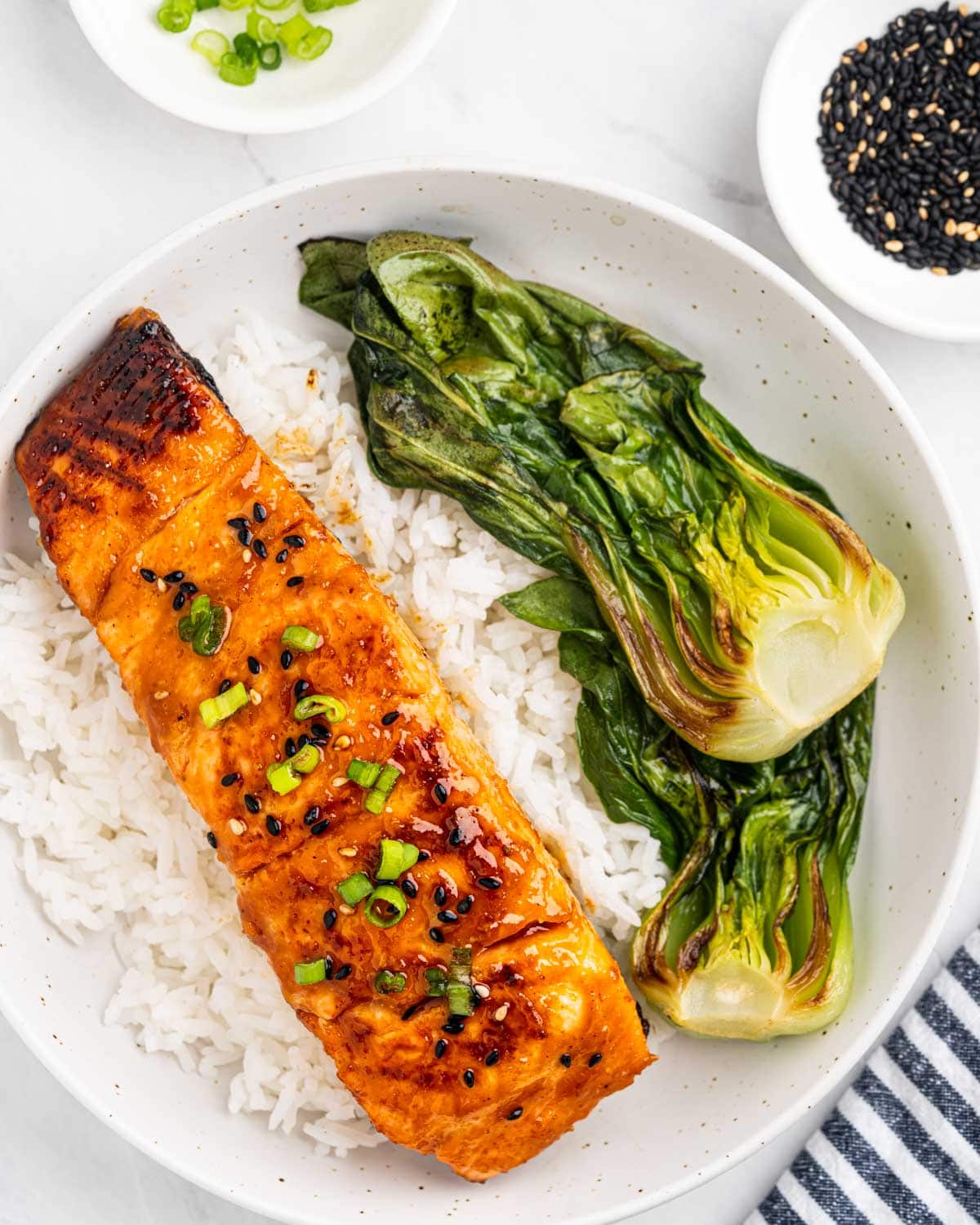
Miso salmon has been in our regular dinner rotation for years. I like that the glaze only takes a few minutes to mix together, and there’s no need to plan ahead hours before dinner.
Baking the salmon first helps it cook gently, then broiling at the end gives the miso glaze that caramelized finish without drying out the fish.
If you love miso-glazed fish, try my Miso Cod next. The cod marinates longer for a deeper miso flavor, then gets the same bake-and-broil finish.
Why Miso and Salmon Work So Well Together
Salmon has a naturally rich flavor that pairs especially well with miso. The miso adds salty, savory umami, while brown sugar and mirin balance it with a little sweetness. Sesame oil adds a subtle toasted flavor, and everything caramelizes as the salmon finishes under the broiler.
The result is a glaze that’s savory and slightly sweet without overpowering the salmon.
A Quick Guide to Miso Paste
If you’ve ever stood in front of the miso section unsure which one to grab, you’re not alone. There are several types of miso, and if you haven’t cooked with it before, it can be hard to know which one you actually need.
Miso is a fermented soybean paste used throughout Japanese cooking. You’ll usually find it refrigerated near the tofu or other Asian ingredients at the grocery store. The different types vary in flavor, so here’s a quick breakdown:
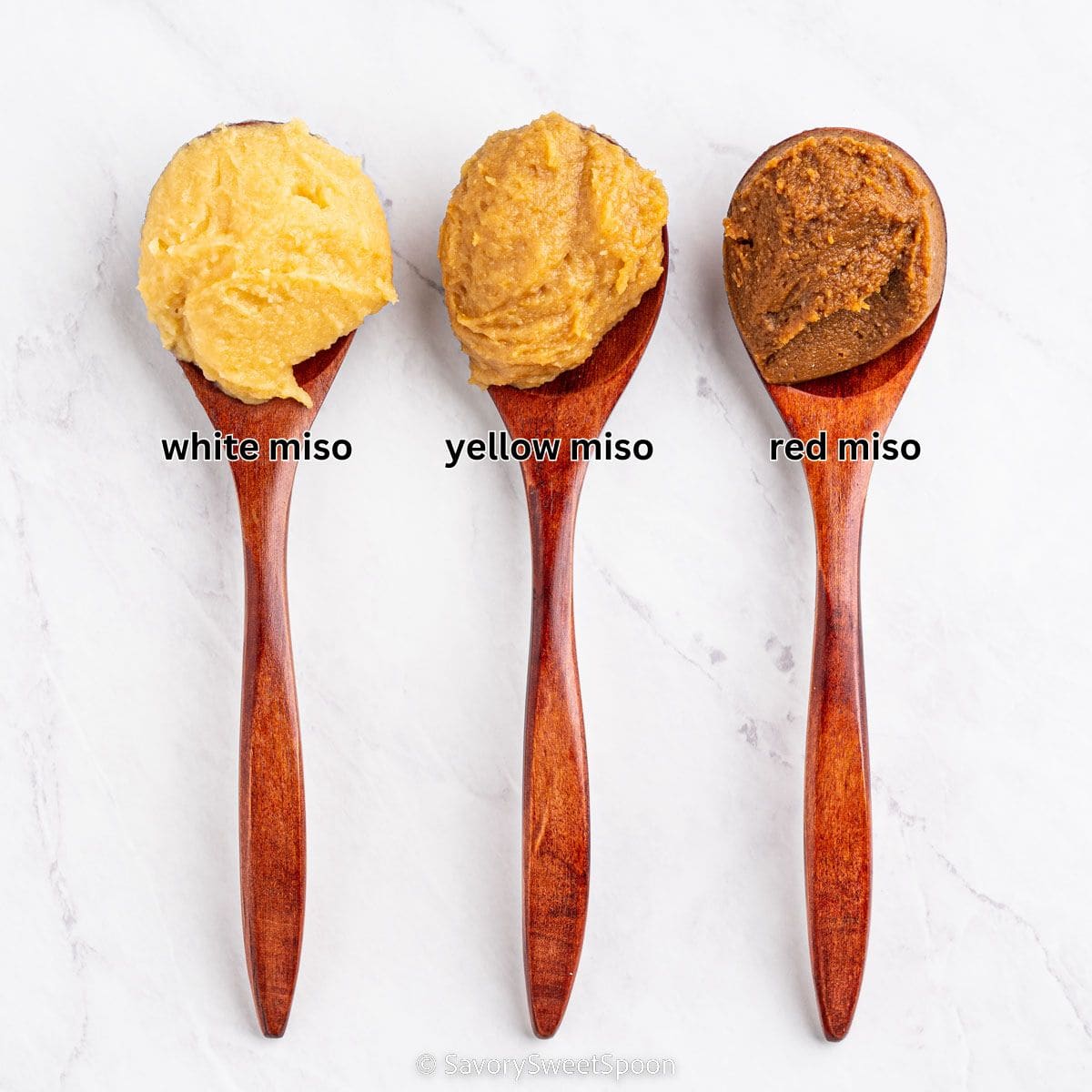
White miso (shiro miso) is the mildest and tends to be sweeter. It’s a good choice if you want a more delicate miso flavor.
Yellow miso falls somewhere in the middle, with a little more savory flavor than white miso but without the intensity of red.
Red miso (aka miso) is fermented longer and has a deeper, saltier, more pronounced flavor. This is my favorite for miso salmon because that deeper flavor stands up well to the richness of the fish and gives the salmon plenty of miso flavor without needing to marinate it first. That’s one of the reasons this recipe works so well for a quick dinner.
Awase miso is a blend of different misos and gives you a balance of mild and stronger flavors.
For this recipe, I prefer red miso, but you don’t need to buy a different container if you already have white or yellow miso at home. Either will work. Just keep in mind that they’re generally milder and slightly sweeter, so you may want to use a little less brown sugar.
A Few Ingredient Notes
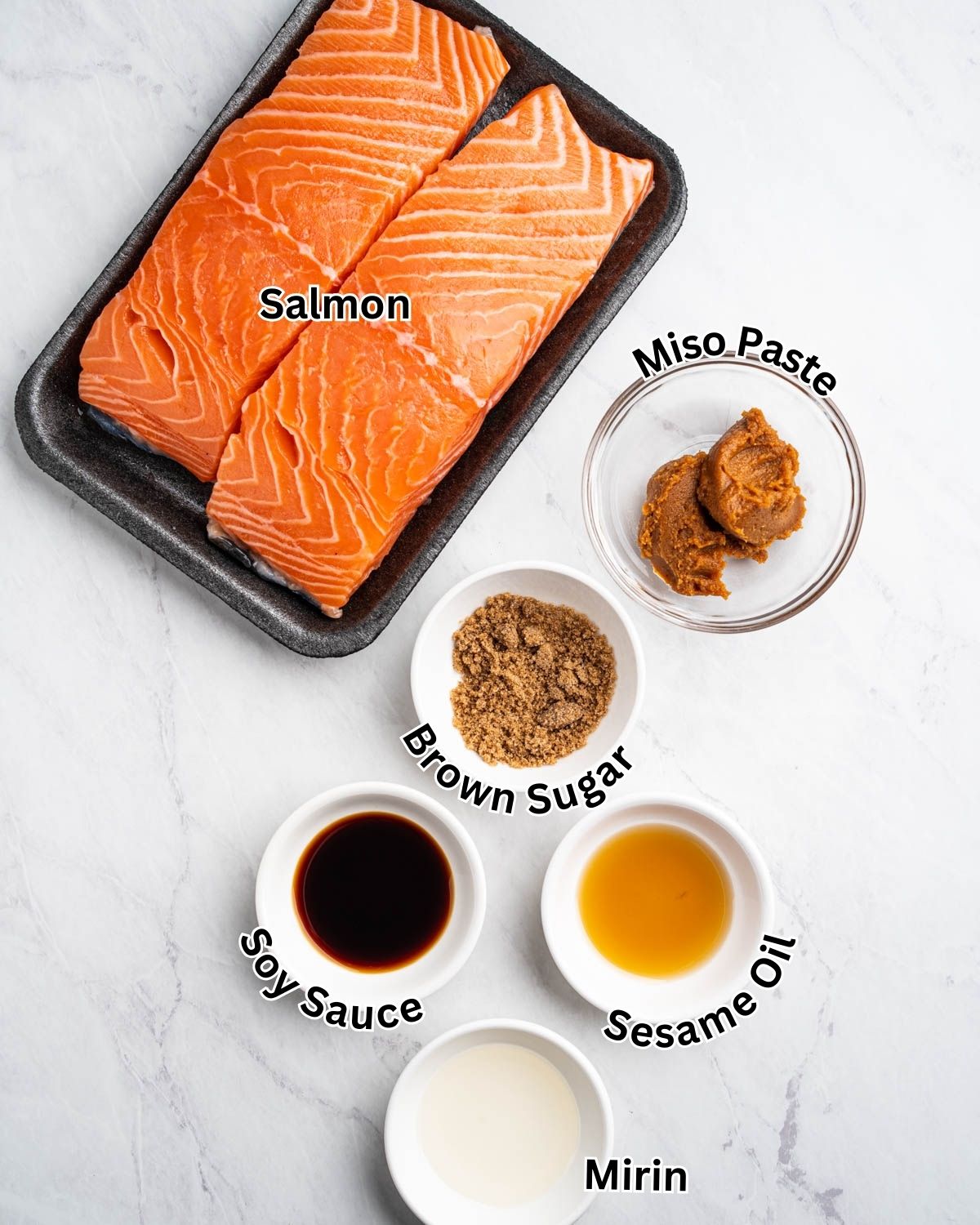
You can find the full amounts in the recipe card below, but here are a few things that are helpful to know.
Salmon: I use four 5–6 ounce salmon fillets, or about 1¼–1½ pounds total. Fillet sizes can vary quite a bit, so if yours are smaller, you may not need all of the glaze.
Miso paste: Red miso is my favorite here because its deeper, savory flavor stands up well to the salmon. White or yellow miso will give you a milder, slightly sweeter glaze.
Brown sugar and mirin: These balance the salty, savory miso and help the glaze caramelize under the broiler.
Soy sauce: A little soy sauce adds another layer of savory flavor to the glaze.
Sesame oil: You only need a small amount, but I like the subtle toasted flavor it adds.
Please scroll ⬇️ to the recipe card for the full ingredient amounts and instructions.
How to Make Miso Salmon
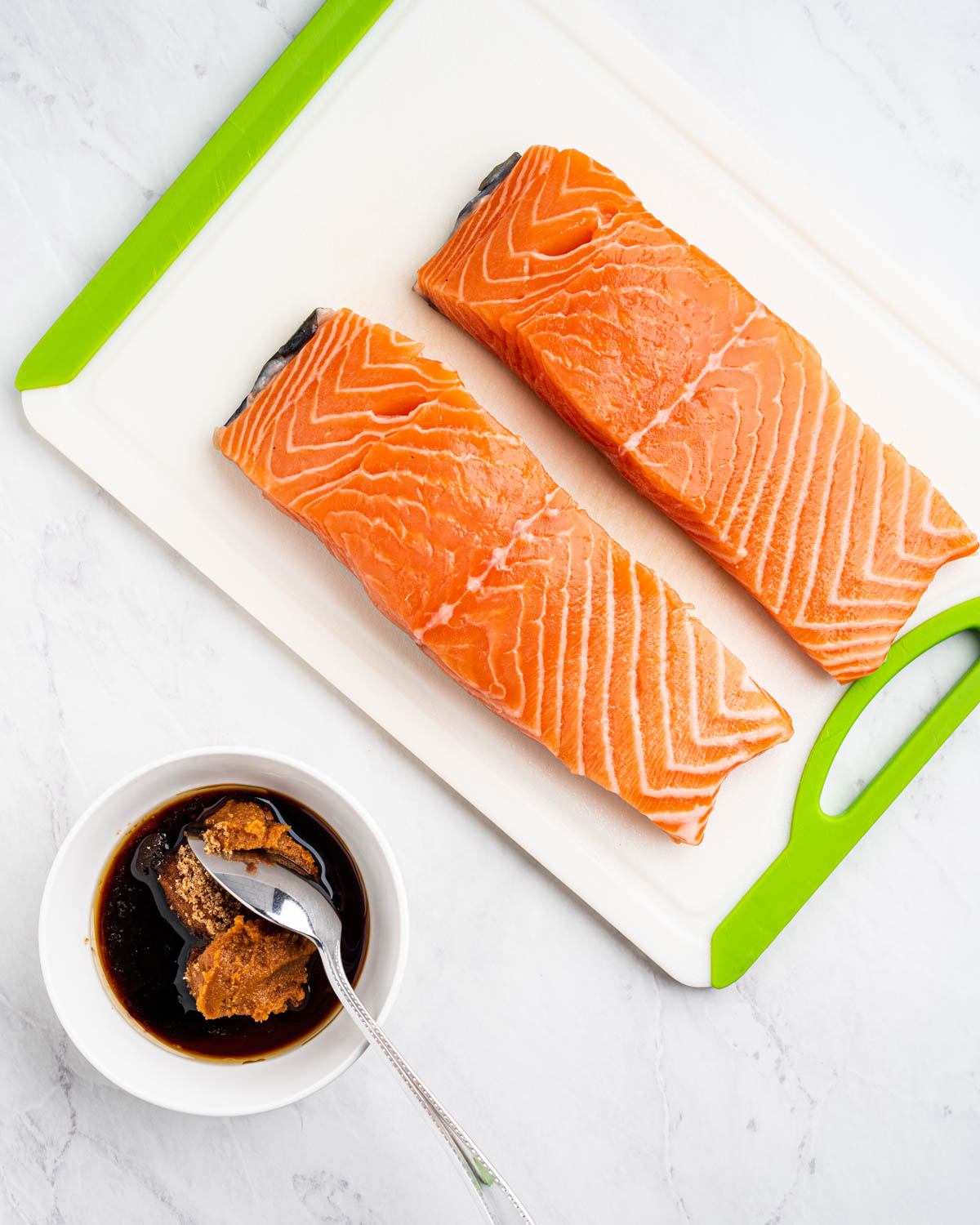
Make the miso glaze. The glaze should be smooth and thick enough to coat the salmon without immediately running off. I like using red miso because the stronger savory flavor holds up well against the rich salmon, but you can adjust the sweetness depending on the type of miso you’re using.
Brush the salmon generously with the glaze. I like to save some of the glaze for another layer toward the end. You don’t need to marinate the salmon, the glaze has plenty of flavor on its own, but if you have extra time, letting it sit for a little while will give the miso more time to flavor the fish.
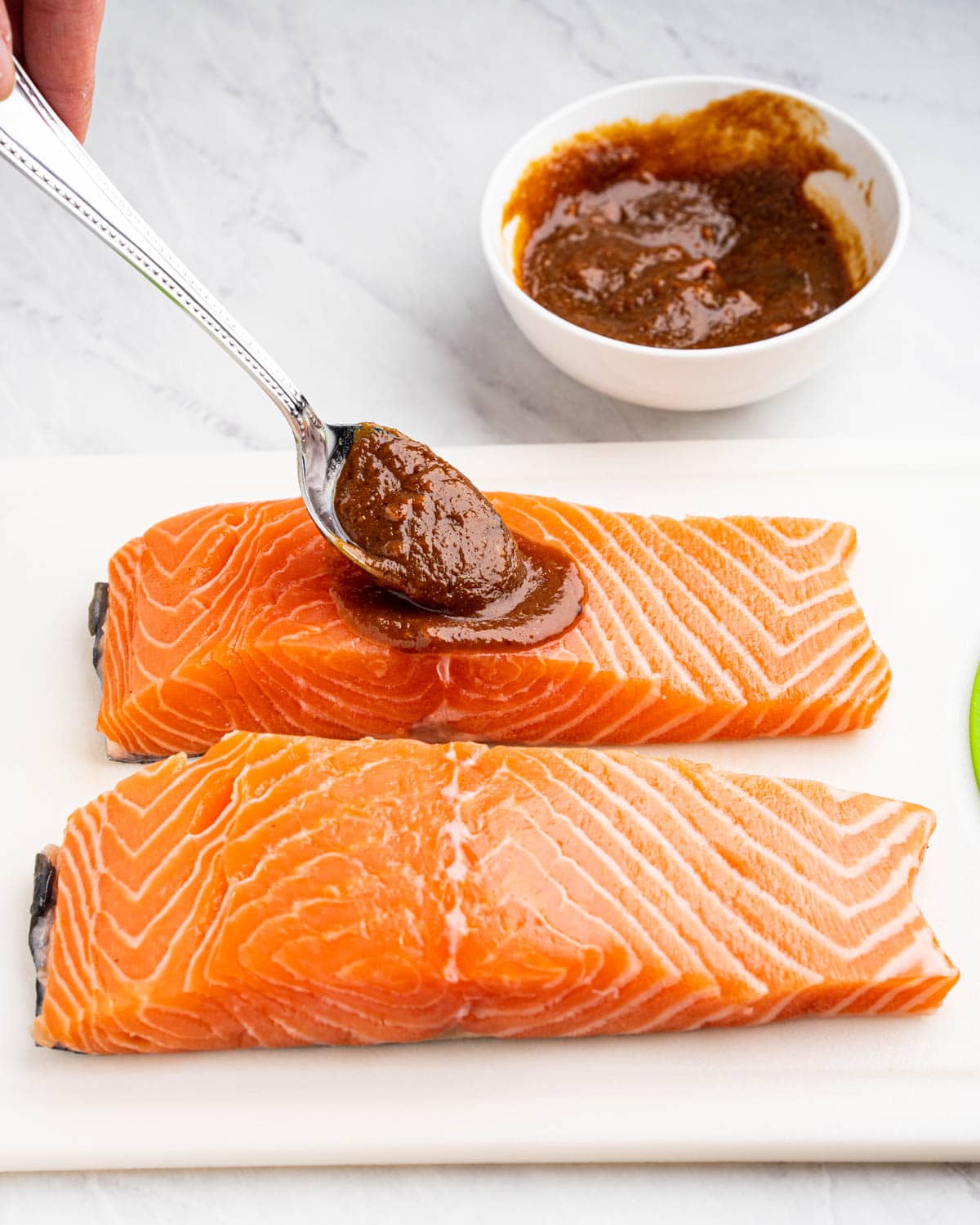
Bake first, then broil. Baking gives the salmon time to cook through without burning the miso glaze. Once it’s nearly done, I brush on the reserved glaze and finish it under the broiler. This is what gives the top that darker, caramelized finish without overcooking the salmon.
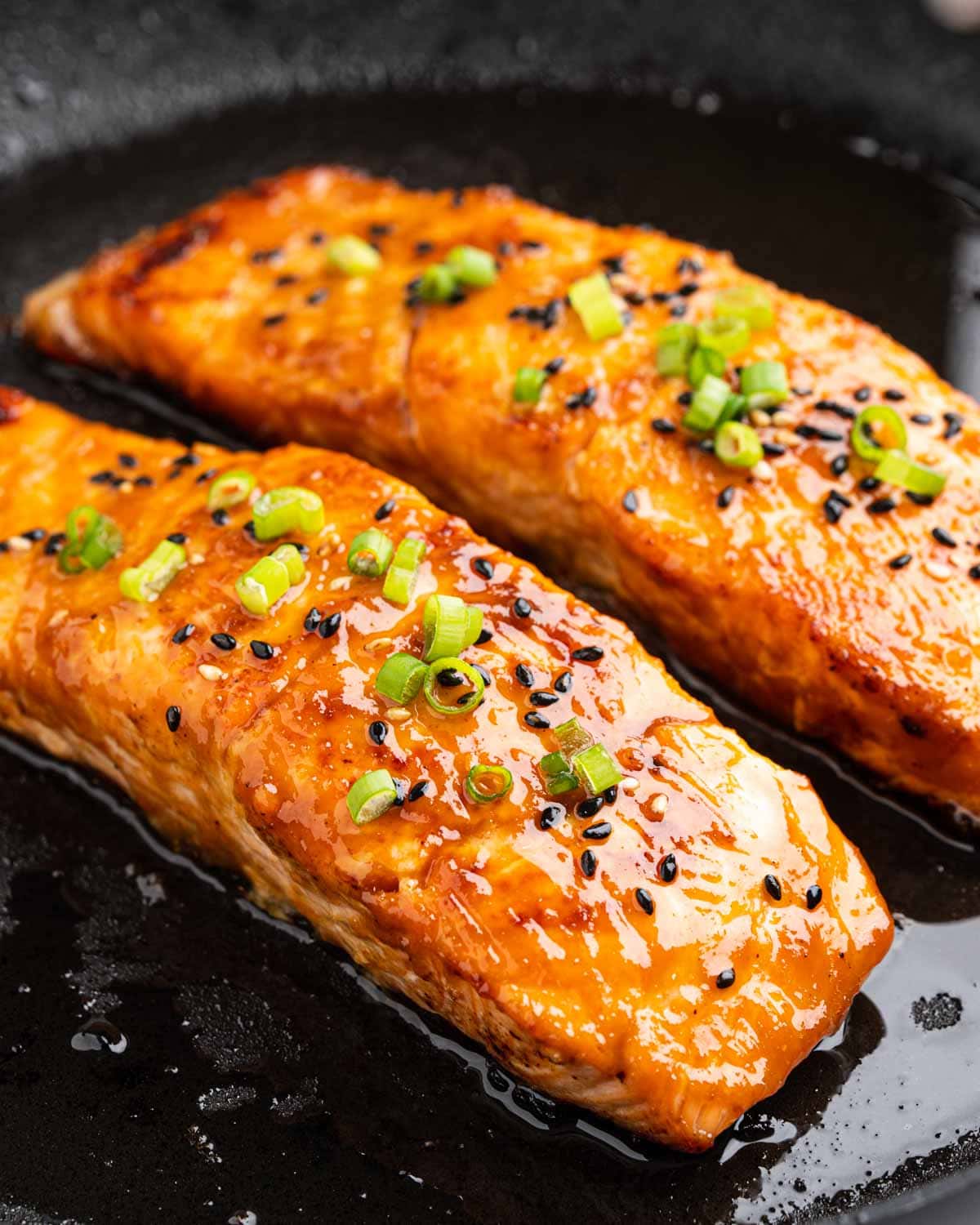
Keep an eye on it under the broiler. This is the only part where you really don’t want to walk away. The sugar and miso can go from nicely caramelized to burnt pretty quickly. I look for browned edges and a slightly charred, glossy top.
I also wouldn’t rely too heavily on the clock here. Salmon fillets can vary quite a bit in thickness. I usually look for fish that flakes easily but is still moist in the center. If your fillets are thinner, start checking them earlier.
Tips for Perfect Miso Salmon
✔️ Marinate it if you have time. You don’t need to marinate the salmon for this recipe, which is one reason it’s such an easy dinner. But if you want a little more miso flavor, you can let the glazed salmon sit in the refrigerator for about 15–30 minutes or up to 2 hours before cooking.
✔️ Watch closely while broiling. Miso, mirin, and brown sugar caramelize beautifully, but the glaze can burn if it’s left under the broiler too long. Once the top is browned and caramelized, take it out.
How to Serve Miso Salmon
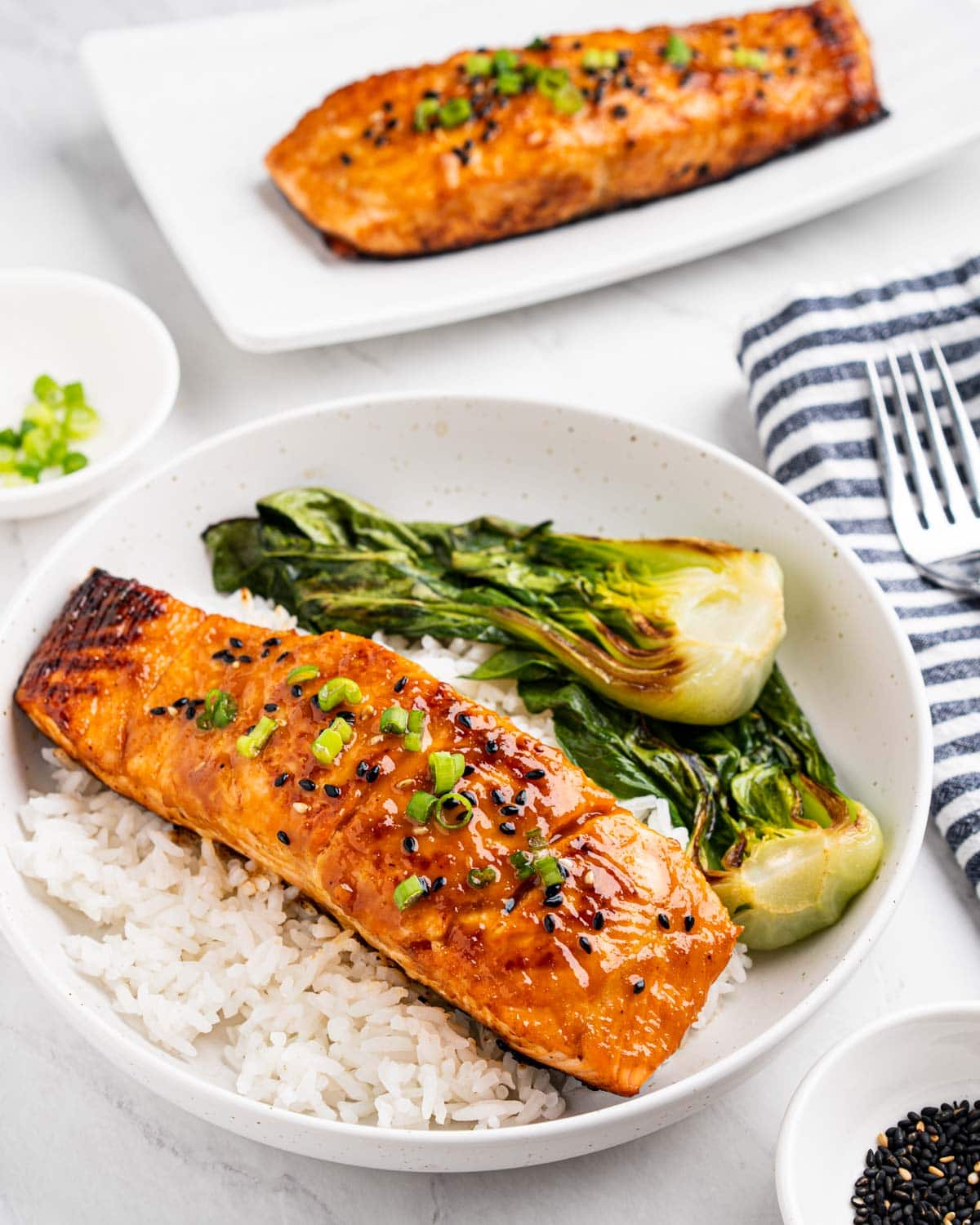
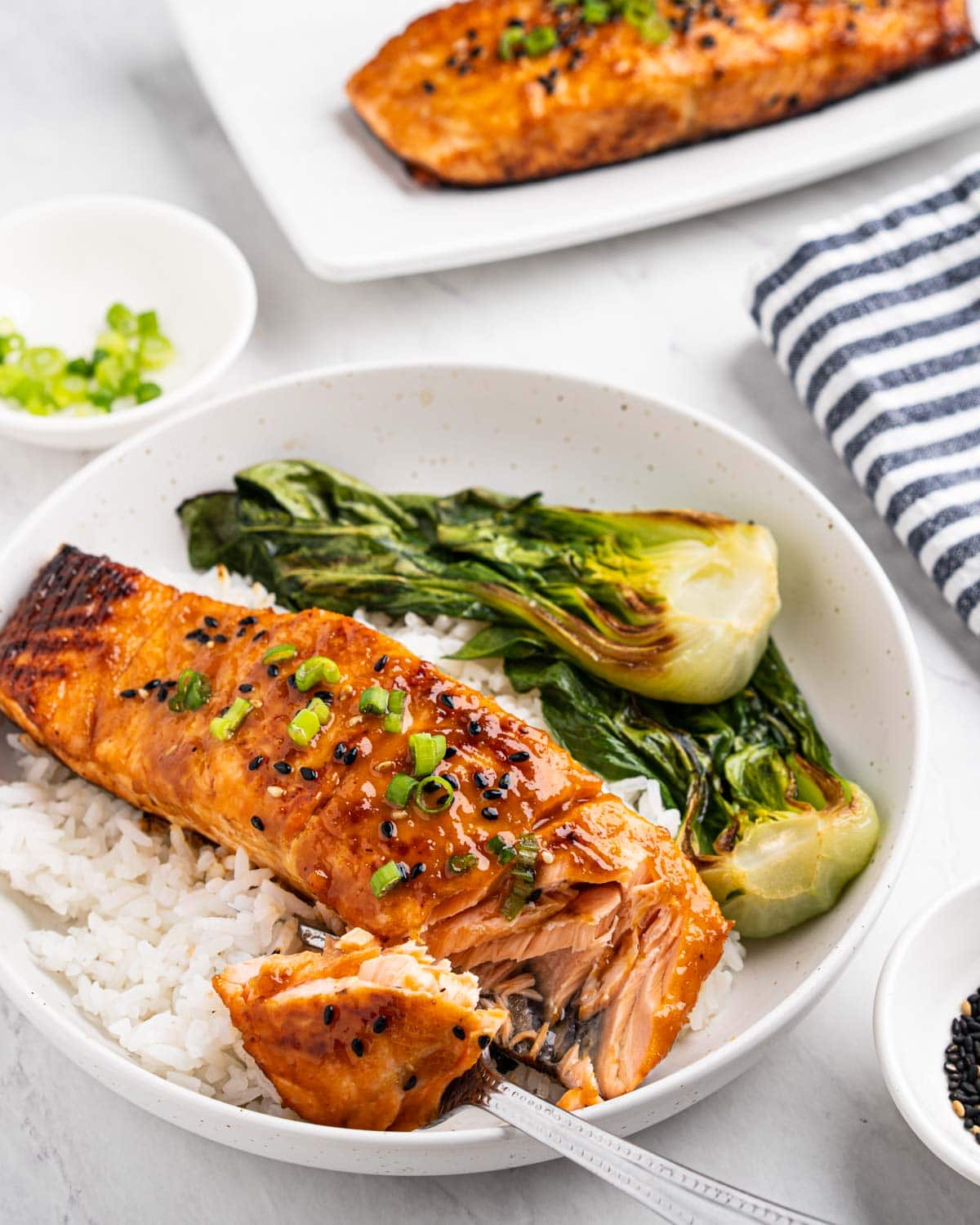
I usually serve miso salmon over steamed rice with a simple vegetable like bok choy, broccoli, or Chinese Broccoli. The rice is perfect for soaking up any extra miso glaze, while a green vegetable keeps the meal simple and balanced. Green onions and toasted sesame seeds make an easy finishing touch.
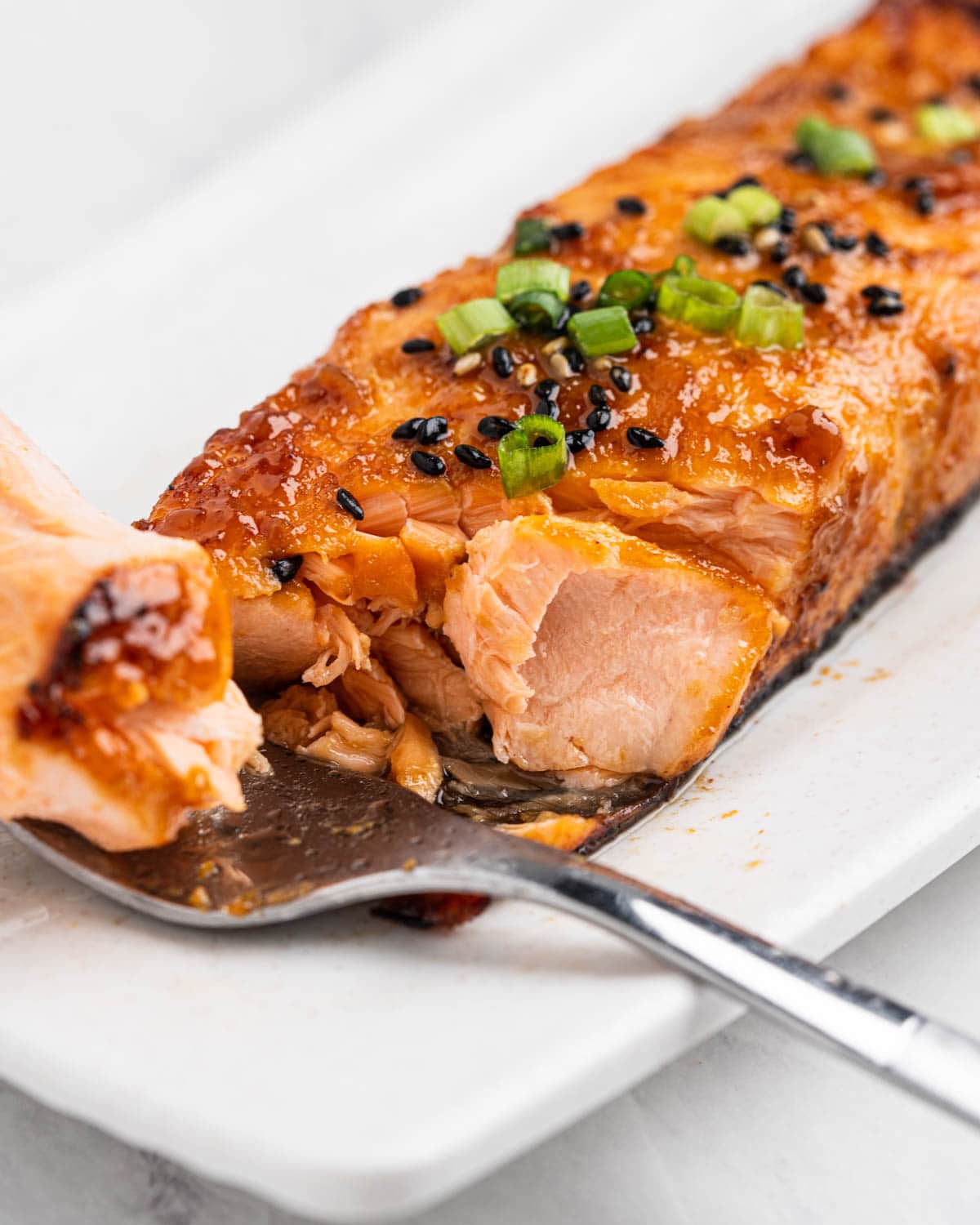
If you make this miso salmon, I’d love to hear how it turned out! Leave a comment and rating below—it helps other readers who are thinking about trying the recipe too.
RECIPE

Miso Salmon Recipe
Ingredients
- 4 (5-6 oz) salmon fillets, about 1¼-1½ pounds total
- 3 tablespoons miso paste
- 1-2 tablespoons brown sugar
- 1 tablespoon soy sauce
- ½ tablespoon sesame oil
- 1½ tablespoons mirin
For Garnish (optional)
- 1 teaspoon toasted sesame seeds
- chopped green onion/scallion
Instructions
- Make the miso glaze. Whisk together the miso paste, brown sugar, soy sauce, sesame oil, and mirin until smooth.
- Prepare the salmon. Preheat the oven to 400°F and line a baking sheet. Place the salmon fillets skin-side down on the prepared pan.
- Glaze the salmon. Brush the salmon generously with the miso glaze, reserving a little glaze for finishing.
- Bake. Bake for 6–8 minutes, depending on the thickness of the fillets.
- Brush and broil. Brush the salmon with the remaining miso glaze. Switch the oven to broil and broil for another 4–6 minutes, watching closely, until the glaze is browned and caramelized and the salmon flakes easily. For food safety, cook to an internal temperature of 145°F.
- Garnish with your existing toppings and serve immediately.




Just wondering how much a salmon fillet weighs for the purpose of this recipe? I’ve made this a couple of times and it’s delicious, but I always end up with way too much glaze when following the measurements. I think maybe the fish comes in smaller average portions where I am (in the EU)!
Hi Trish! Thanks so much! I’m glad you’ve enjoyed the recipe. The salmon fillets I typically use are about 5–6 oz (140–170 g) each, so around 1¼–1½ pounds (560–680 g) total for the recipe. If your fillets are smaller, that would definitely leave you with extra glaze. You can either scale the glaze down a bit or save any leftover to brush over vegetables or serve alongside rice. I’ll also update the recipe to include the total salmon weight to make it clearer for everyone. Thanks for pointing that out!
Fabulous easy tasty
Best salmon recipe! So full of flavor. Thank you for such a great recipe! 🙂
Hi, Alaina! Thank you so much! I’m so happy you loved it! Thanks for trying the recipe and sharing your feedback!
Hi, this recipe looks wonderful. I have not cooked with miso before, so i’m excited to try it. I’m just wondering, can the salmon be pan fried rather than cooked in the oven?
Hi! Thank you so much, I’m excited for you to try it! Yes, you can definitely pan fry the salmon instead of baking.
Here’s how I’d do it:
1. Pat the salmon dry and season lightly if needed
2. Heat a pan over medium heat with a little oil
3. Place the salmon skin-side down and cook for about 4–5 minutes, until the skin is crispy
4. Flip and cook another 2–3 minutes
5. Brush the miso glaze on during the last minute or two of cooking so it doesn’t burn
You can also add a little extra glaze right at the end for more flavor. It won’t have the exact same broiled finish, but it’ll still be really delicious with a nice caramelized glaze. Let me know how it turns out!
Thank you for this! I just made it this way and it turns out delicious.
Hi Sarah! You’re so welcome! I’m so glad it turned out delicious for you. Thanks for taking the time to come back and let me know!
My husband and I loved your sauce! Just the right amount of sweet and salty! It was delicious with the line caught salmon from my neighbor. Thank you so much!
That sounds amazing, especially with fresh line-caught salmon! I’m so glad you both loved the sauce. Thanks so much for trying the recipe and sharing!
Why did you not address the vegetable that was made with the recipe for the picture?? I would like to make that. Trying to incorporate different vegetables.
Hi Dawn! The greens beside the Miso Glazed Salmon are bok choy. I carefully trim the stem without cutting too much to keep it whole. Afterward, I halve it and place it in a pan (cut side down) with a splash of water and oil. Covering the pan with a lid, I let it steam until tender. You can add any seasoning to it in the end.
I didn’t even know there were so many different miso options. I will have to try them all to find the one I like.